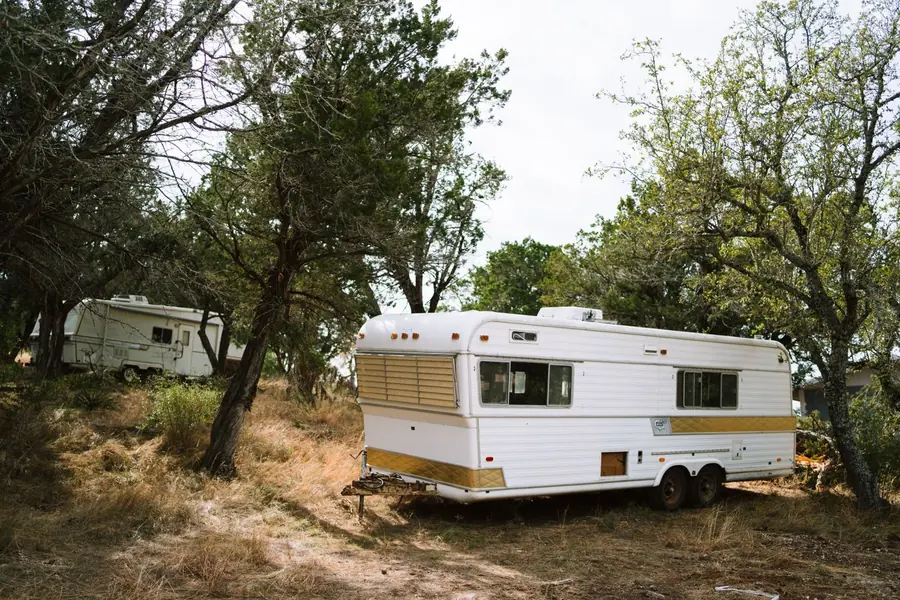
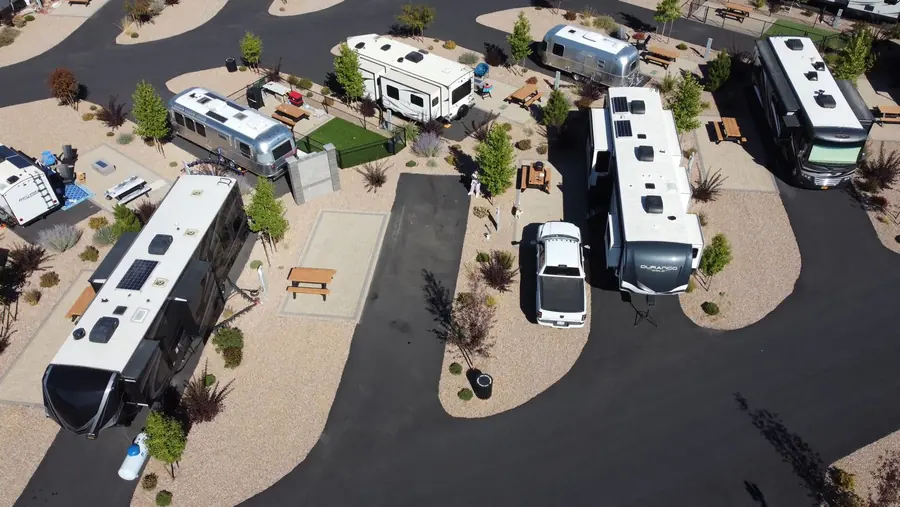
A technician comes to your campsite, storage lot, driveway or the shoulder of I‑35. Most common RV problems — slide-outs, roof leaks, AC, power, water systems — get fixed on site without towing the rig anywhere.
Almost every mobile RV invoice is built the same way, and nearly all confusion about a bill comes from not knowing that going in. Rates are set by the technician who comes out — here is the structure, so you know exactly what to ask.
| Part | What it is |
|---|---|
| Service call | A flat fee for coming out to you, charged once per visit — whether the job takes ten minutes or three hours |
| Labor | Hourly after that, usually with a one-hour minimum. Diagnosis is often folded into the first hour rather than billed separately |
| Parts | Separate. Either supplied by the technician or by you — ask which, because it changes who warranties the part |
| Extras | After-hours and weekend call-outs cost more. Mileage may apply past a set radius. A return trip to fit an ordered part may mean a second service call |
A technician who won't give you the service call fee and the hourly rate over the phone is telling you something. Any straight operator will say both numbers without hesitating. Get them before you book, not when the invoice appears.
Mobile work covers the large majority of what actually strands people. The exceptions are structural collision damage, full roof replacement, and anything needing a paint booth or a lift — those go to a shop.
Resealing, lap sealant, seam and vent work before soft spots set in.
Won't extend, won't retract, grinding, or out of alignment.
Torn fabric, bent arms, motors, and awnings stuck part-way out.
Fridges, air conditioners, water heaters, and furnaces.
Converters, inverters, batteries, shore power and dead circuits.
Pumps, leaks, tanks, toilets and winter freeze damage.
Bearing repack, brake service and suspension on towables.
Won't start, won't hold load, surging, or overdue for service.

Central Texas puts a specific kind of wear on a rig, and it shows up in the same handful of failures over and over.
Heat. Long runs of 100°F+ cook roof sealant and push rooftop air conditioners to their limit. UV breaks down self-levelling lap sealant around vents, skylights and the front cap seam faster here than almost anywhere — which is why roof inspections in Austin want to be annual, not "when I notice a stain".
Hard freezes. Texas doesn't freeze often, which is exactly why freeze damage is so common: rigs sit un-winterised because most winters don't need it. When a real freeze does come through, water lines, pumps and low-point drains split. If your RV sat through a hard freeze un-winterised, get the water system pressure-tested before you trust it.
Hill Country roads. Regular running west of town on TX‑71, US‑290 and the ranch roads beats up suspension, shackles and wheel bearings on towables far faster than interstate miles do.
Event season. F1 weekend at Circuit of the Americas, ACL and SXSW pull thousands of rigs into the metro at once — many of which have been parked for months. Expect mobile techs to be booked solid those weeks, and get ahead of anything you already know is wrong.
| Year, make, model of the rig |
| Towable or motorised |
| What it's doing — and what changed |
| Where it's parked right now |
| Shore power available? 30A or 50A |
| Is it driveable / towable as-is |
Across the Austin metro and the I‑35 corridor, including campgrounds, RV parks, storage lots, private property and roadside.

Usually. Slide-outs, roof and sidewall leaks, air conditioners, refrigerators, water heaters, converters, inverters, batteries, pumps, plumbing, awnings and brakes are all normal mobile work. Collision repair, full roof replacement, paint and anything needing a lift are shop jobs.
Depends on the day and how far out you are. Same-day happens; during event weekends and the first hot stretch of summer it often doesn't. If you are stranded and blocking travel, say so at the start of the call — that changes the priority.
Yes, provided the rig is somewhere a technician can safely work. A shoulder on a busy stretch of I‑35 may not be; a frontage road or a lot usually is. If it isn't safe, the first step is getting it moved, not repaired.
Often, for covered failures. Most mobile techs will document the diagnosis for a claim, but you generally pay at the time of service and get reimbursed. Confirm with your policy before the appointment — some require pre-authorisation.
No. Propane work is separately licensed in Texas through the Railroad Commission, and we do not advertise or arrange it. If your issue is a propane line, regulator or leak, go to an LP-licensed technician directly.
Then a good tech tells you that on the phone or after diagnosis, and you have not spent much to find out. That is the point of the service call fee.
Tell us what the rig is doing. If it's something a mobile tech can fix on site, we'll get you connected today.
(512) 737-7536